Pentara® logo

Publications

Over 200 publications, including the composite endpoints regulators now recognize. We publish our methodology in the open so reviewers meet it before your submission does.

200+
Publications
1996–2026
Span
28
Contributing authors
White paper

Global Statistical Tests: powering the trial your budget can actually fund

When the sample size a conventional design demands is larger than the trial you can run, a Global Statistical Test lets the clinical-endpoint hypotheses be tested anyway. The paper sets out when GST applies, how it is pre-specified, and how it has been received in review.

One email with the PDF. No sequence, no follow-up unless you ask for one. We use your details only to send it; see our Privacy Policy.

Research

Publications library

7 publications

Sorted newest first

  1. 2025 · Parkinsonism and Related Disorders

    Development of composite scales for assessing disease progression and treatment effects among patients with Parkinson’s disease in a clinical trial setting

    Dickson, Samuel · O'Keefe, Patrick · Hendrix, Suzanne

    Abstract

    Background: The measures used to assess Parkinson’s disease (PD) in clinical trials were developed for a broad spectrum of disease severity, limiting their ability to detect meaningful changes in early PD over a feasible study period. Objective: To develop PD composite scales (PARCOMS) using clinical trials data with increased responsiveness to clinical decline in patients with early untreated disease. Methods: Subjects from the placebo arms of clinical trials (Critical Path for Parkinson’s [CPP] dataset), diagnosed with PD within the previous two years, with no current or prior use of dopaminergic therapies were included. Partial least squares (PLS) regression was used to develop two composite scales: PARCOMS-Function using items from the Movement Disorder Society Unified Parkinson’s Disease Rating Scale (MDS-UPDRS) Part II and Parkinson’s Disease Questionnaire (PDQ-39) scales, and PARCOMS-Motor using items from MDS-UPDRS Parts II and III. Scale responsiveness was estimated using mean to standard deviation ratios (MSDRs) for change from baseline at 12-months. Results: The MSDR for PARCOMS-Function (n = 140) was 12.3 % higher vs MDS-UPDRS Part II alone and 339 % higher vs PDQ-39 alone. The MSDR for PARCOMS-Motor (n = 181) was 27.5 % higher vs the combined MDS- UPDRS Parts II and III. PARCOMS-Function retained 15-items (34.1 %) from Part II and PDQ-39. PARCOMS-motor retained 23-items (50.0 %) from Part II and III. Items that were not responsive to change or that were correlated with more responsive items were omitted. Conclusions: Clinical trial data were used to develop two PARCOMS scales which demonstrated greater sensitivity to disease progression in patients with early PD over 12-months compared to the original scales.

    Open → (opens in a new tab)
  2. 2025 · Neurotherapeutics

    A double-blind, controlled trial of circadian effective light therapy in patients with Parkinson's disease

    Hendrix, Suzanne

    Abstract

    Despite current medical therapy for Parkinson's Disease (PD), many experience persistent motor symptoms and significant unmanaged non-motor issues. Previous studies suggest that light therapy (LT) provides benefits for motor and non-motor features of PD. This study evaluated Circadian Effective LT (CELT) with a spectral band between 460 and 545 ​nm for the motor and non-motor features of PD. We conducted a multi-center, randomized, double-blind, controlled clinical trial of CELT in people with Parkinson's disease on standard-of-care therapy. Ninety-two participants (45 active, 47 control) were randomized 1:1 to active or control CELT for 1 ​h each evening for 6 months. Patients were evaluated in their ‘ON state’. The mean (SE) change on the primary endpoint of the MDS-UPDRS parts 1–3 was −17.7(2.8) active vs −9.7(3.5) control, for a LSM difference of −8.0 (4.4) (p ​= ​0.074, 95% Confidence Interval: −16.7, 0.8), reflecting a trend toward improvement over control. Key secondary endpoints included PDQ-39 and CGI which favored active treatment (−5.7 ​± ​2.7; p ​= ​0.038, and −0.4 ​± ​0.2; p ​= ​0.066 respectively), while PDSS-2 Disturbed Sleep showed no difference between groups. Other secondary endpoints that supported the overall treatment effect of CELT included ESS (−1.52 ​± ​0.78; p ​= ​0.054) and CGI-E (−0.3 ​± ​0.2; p ​= ​0.088). Daily LT, with a circadian effective targeted spectrum of light, was well tolerated by PD patients, had no serious adverse effects and showed improvement in both motor and non-motor MDS-UPDRS and other scores. Larger double-blind studies are warranted to further assess the effectiveness of CELT in PD.

    Open → (opens in a new tab)
  3. 2025 · Neurol Ther

    Development and Validation of PARCOMS Composite Scales for Assessing Disease Progression and Treatment Effects in Parkinson's Disease

    Dickson, Samuel · O'Keefe, Patrick · Hendrix, Suzanne

    Abstract

    Introduction: Measures designed to comprehensively assess Parkinson's disease (PD) irrespective of disease stage and treatment status may be unable to capture nuances in disease progression, particularly in early-stage PD. The objective of this paper is to develop PARkinson's COMposite Scales (PARCOMS) with increased responsiveness to clinical decline using items of the Movement Disorder Society Unified Parkinson's Disease Rating Scale (MDS-UPDRS) for three discrete cohorts of patients. Methods: Patients with confirmed PD from the Parkinson's Progression Markers Initiative (PPMI) data were assigned to three cohorts based on use of dopaminergic treatment, stage of disease, and presence of motor complication. For each cohort, items from MDS-UPDRS Part I (PARCOMS-Non-Motor) and Parts II and III (PARCOMS-Motor) were selected based on responsiveness using partial least squares (PLS) regression. The responsiveness of the scales was estimated using mean-to-standard deviation ratios (MSDRs) of their change values. Results: Compared to the original MDS-UPDRS, MSDRs for PARCOMS-Motor increased 13.1% (untreated cohort, n = 430), 78.2% (treated-without-motor-complications cohort, n = 426), and 100.6% (treated-with-motor-complications cohort, n = 538). The MSDR increases observed for PARCOMS-Non-Motor were 13.9%, 6.8%, and 20.7%, respectively. Across cohorts, turning in bed and speech items were large contributors to the PARCOMS-Motor scales. Items for cognitive impairment and urinary problems were substantial contributors to PARCOMS-Non-Motor across cohorts. There was variability in the weighting of items representing different clinical concepts across cohorts for each composite, confirming heterogeneity in disease progression across disease stages. Conclusions: PD stage-specific composite measures were developed and demonstrated greater sensitivity to change than the original MDS-UPDRS, supporting the value of weighted composites tailored for disease stage.

    Open → (opens in a new tab)
  4. 2021 · Movement Disorders

    Impact of specialized light therapy in Parkinson's disease on MDSUPDRS parts 1-3 subscales

    Hendrix, Suzanne · Hennessey, Sean · Dickson, Samuel

    Abstract

    Objective: An exploratory analysis to examine the MDS-UPDRS 1-3 subitems of PD patients who underwent specialized light therapy (SLT) to assess the breadth of impact of SLT on motor and non-motor symptoms. Background: Several trials of light therapy have been conducted in PD patients using a variety of endpoints. These studies indicate benefit of PD on a variety of motor and non-motor symptoms; however, each study reports only one to a few endpoints. We previously reported the MDS-UPDRS 1-3 combined scores for a SLT PD study [1] and expand by reporting each of the subitems to better evaluate the impact of SLT. Method: A prospective, randomized, double-blind, multi-center, controlled study was conducted on PD subjects on dopaminergic therapy without significant motor complications. Participants were randomized 1:1 to narrow band blue/green light (active) or low intensity white light (control), thought to not provide clinical benefit for one hour in the evening for 6 months. The previously reported primary endpoint was change from baseline (BL) to 6 months (6M) in the MDS-UPDRS 1-3. Significance of the subitem analysis was considered at p<0.05, trending significance was p<0.10 and no corrections for multiple comparisons were done. Results: 92 subjects (45 active, 47 control) were enrolled at 3 centers. The primary endpoint MDS-UPDRS 1-3 improved by 17.7(2.8) for the active vs 9.7(3.4) for control. The difference of 8.0(4.4) trended towards significance P=0.074. The subitems for each of the part of the MDS-UPDRS are shown in [figure 1]. MDS-UPDRS 1 has 13 subparts, 3 subitems favored and another 3 trended for SLT. MDS-UPDRS 2 has 13 subparts, 2 favored and another 1 trended for SLT. MDS-UPDRS 3 has 33 subparts, 2 favored and another 2 trended for SLT. In total the MDS-UPDRS 1-3 has 59 subitems, 7 favored and 6 trended in favor of SLT. None of the 59 subitems favored or trended in favor for control. Conclusion: SLT had a broad impact across a broad range of subitems measured by MDS-UPDRS. Those that significantly favored SLT treatment include depressed mood, anxious mood, urinary problems, chewing and swallowing, eating tasks, rest tremor amplitude RUE, rest tremor amplitude RLE. Daytime sleepiness and fatigue which are typically worsened by dopaminergic treatments, trended in favor of SLT. If confirmed in larger SLT studies this would represent a broad ranging impact to the treatment of motor and non-motor symptoms in PD.

    Open → (opens in a new tab)
  5. 2019 · Alzheimer's & Dementia

    P4-023: CLINICAL TRIAL DESIGN FOR A PHASE II, RANDOMIZED, PLACEBO-CONTROLLED TRIAL OF AMX0035 IN ALZHEIMER'S DISEASE

    Hendrix, Suzanne

    Abstract · matched in abstract

    Background: Amylyx has developed a novel therapeutic, AMX0035, for the treatment of neurodegenerative disease. AMX0035 is a proprietary combination of two small molecule compounds, Sodium Phenylbutyrate (PB) and Tauroursodeoxycholic Acid (TUDCA), de-signed to promote neuronal viability through simultaneous inhibition of ER stress and mitochondrial stress. PB and TUDCA have been evaluated separately in in vitro and in vivo models of Alzheimer’s disease (AD), and clinical trials in amyotrophic lateral sclerosis, Parkinson’s disease and Huntington’s disease. Amylyx discovered a synergy between these two compounds when administered together in a particular range of ratios across multiple preclinical models. Recruitment for the clinical trial began in late 2018. Methods: The study will evaluate safety, tolerability, and biomarkers of molecular target engagement, AD pathology, neurodegeneration and neurophysiology that indicate AMX0035 target engagement and neurobiological effects over 24 weeks. This will be a 6-month, parallel-group, randomized, double-blind, placebo-controlled study of people with late mild cognitive impairment (MCI) or early to moderate dementia due to AD. Participants in the active treatment arm will receive 3g of PB and 1g TUDCA administered orally twice daily. Results: Participants will be evaluated at Poster Presentations: Wednesday, July 17, 2019P1282baseline and at week 24 with multi-sequence structural and functional MRI to assess changes in regional brain volumes (T1), cerebral perfusion (ASL), functional connectivity (BOLD) and cerebrovascular pathology (FLAIR, SWI). Lumbar punctures will be performed at baseline and 24 weeks for selected CSF biomarkers including: amyloid-b1-42, tau, neurofilament light chain (NfL), and markers of mitochondrial redox, HDAC activity, neuronal injury, and neuroinflammation. Patients will be evaluated at weeks 1, 6,12, 18, and 24 for safety, tolerability, and changes in symptoms, as measured with the ADAS-Cog 13, ADCS-ADL, and NPI. Conclusions: This early phase trial is designed to evince target engagement, neurobiological effects, safety and tolerability of AMX0035with multiple objective endpoints including, standard clinical assessments and both established and novel biomarkers associated with neurocognitive impairment. Data will help determine whether to advance AMX0035 to a larger study to establish efficacy and safety and inform choices in study design, patient characteristics and outcome measures.

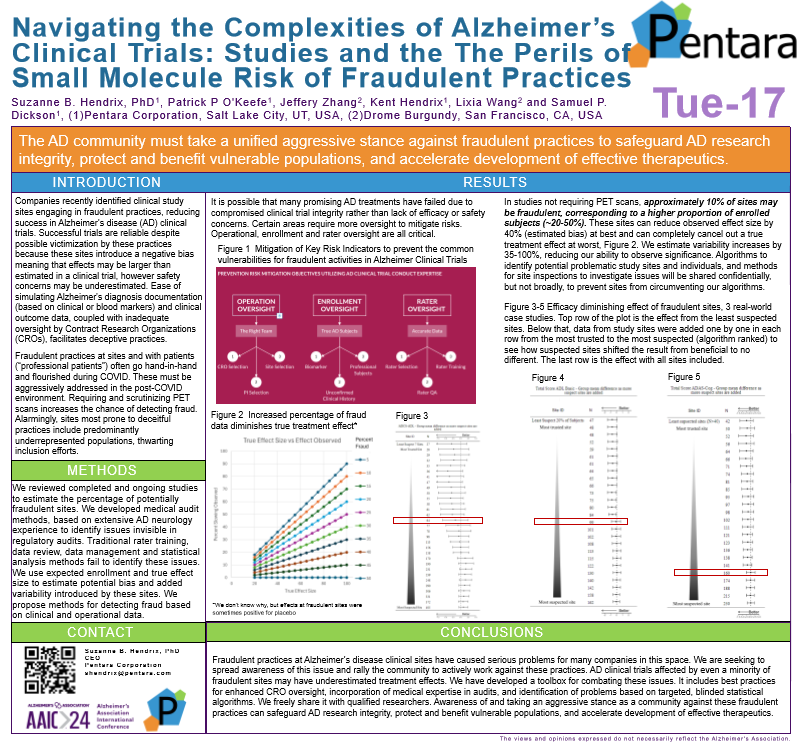
    Open → (opens in a new tab)
  6. 2018 · International Parkinson and Movement Disorder Society

    Double-blind controlled trial of Spectramax (TM) light therapy for the treatment of Parkinson's disease patients on stable dopaminergic therapy

    Hendrix, Suzanne

    Abstract

    Objective: To evaluate the safety and effectiveness of Spectramax™ specialized bandwidth light therapy (LT) as adjunctive treatment in Parkinson’s disease (PD). Background: Previous studies have suggested that LT improves circadian rhythm and may be effective for both motor and non-motor features of PD. Additionally, pre-clinical studies have suggested that LT may be beneficial in animal models of PD. Methods: We performed a multi-center, randomized, double-blind, controlled clinical trial of LT in PD patients on stable dopaminergic therapy. Patients with severe dyskinesia, cognitive impairment, high doses of dopaminergic therapy, and prior exposure to LT were excluded. Participants were randomized 1:1 to Spectramax™ LT (950 lux blue/green LED light, λ = 460 – 570 nm) or control LT with a bandwidth that was not thought to be biologically active (100 lux white LED light, λ = 415 – 780 nm), for 60 minutes each evening for 6 months. The primary endpoint was the change from Baseline to the final treatment visit in the MDS-UPDRS Parts 1-3 score. Secondary endpoints included change from Baseline in CGI-I, PDQ-39, PDSS-2, ESS and individual MDS-UPDRS components. Results: 92 subjects (45 active, 47 sham) were enrolled at 3 centers in the US and Europe. Baseline demographics were comparable in the 2 groups with the exception that the mean age was higher in the active group (70.2 vs. 65.9, p=0.009). The change (SD) from Baseline to 6 months in the MDS-UPDRS 1-3 score was 17.7(2.8) for the active group vs 9.7(3.4) for the control group (LSM difference = 8.0 (4.4); p=0.074). Nominally significant improvements with Spectramax™ light therapy were observed in PDQ-39 (p=0.038) and MDS-UPDRS part I (p=0.006) with a trend for ESS (p=0.054) scores. One subject in each group discontinued due to an adverse event (dizziness in one sham-treated patient and complaints of vision deterioration and light-headedness in one in the active group). The most common adverse events were ocular (dry eye, teary eye, and eye strain) and were more frequent in the active LT group. Conclusions: Once-daily Spectramax™ LT is associated with a trend in improving PD symptom severity, and improvements of non-motor symptoms and quality of life. LT was well-tolerated. Larger double-blind studies are warranted to further study the effectiveness of LT in PD.

    Open → (opens in a new tab)
  7. 2016 · Immunotherapy and Biomarkers in Neurodegenerative Disorders

    Immunotherapy of Parkinson's Disease

    Hendrix, Suzanne

    Abstract

    Abstract: Parkinson’s disease (PD) is the second most common neurodegenerative disorder. It elicits a broad range of debilitating motor and as well as non-motor symptoms, both of which can lead to serious disability. There is currently no available agent with disease modifying properties. Immunotherapy is increasingly being investigated as a disease modifying treatment for PD based on our improved understanding of the pathophysiology of the disease. Current evidence points to a causal role of misfolded alpha-synuclein (α-syn) in the development and progression of PD and it has therefore become a primary focus for immunotherapy. Today, two principal approaches are being pursued: active and passive immunization. This chapter first addresses progress in active and passive immunotherapeutic approaches targeting α-syn for Parkinson’s disease in animal models. We then discuss clinical progress of α-syn immunotherapy including ongoing clinical trials. Finally, we address challenges and future perspectives for PD immunotherapy.

    Open → (opens in a new tab)

Looking for older work, or a specific methodology paper? Our research team can point you to the right reference.

Ask our team