Pentara® logo

Publications

Over 200 publications, including the composite endpoints regulators now recognize. We publish our methodology in the open so reviewers meet it before your submission does.

200+
Publications
1996–2026
Span
28
Contributing authors
White paper

Global Statistical Tests: powering the trial your budget can actually fund

When the sample size a conventional design demands is larger than the trial you can run, a Global Statistical Test lets the clinical-endpoint hypotheses be tested anyway. The paper sets out when GST applies, how it is pre-specified, and how it has been received in review.

One email with the PDF. No sequence, no follow-up unless you ask for one. We use your details only to send it; see our Privacy Policy.

Research

Publications library

16 publications

Sorted newest first

  1. 2026 · The Journal of Prevention of Alzheimer's Disease

    Phase 3 randomized clinical trials of simufilam in mild-to-moderate Alzheimer’s disease

    Hendrix, Suzanne · Mallinckrodt, Craig

    Abstract · matched in abstract

    Background: Soluble amyloid β1–42 (Aβ42) signals via the α7 nicotinic acetylcholine receptor to hyperphosphorylate tau in Alzheimer's disease (AD). Simufilam disrupts this pathogenic signaling by binding filamin A and disrupts its linkages with inflammatory receptors to reduce neuroinflammation. We assessed simufilam in two Phase 3 clinical trials in mild-to-moderate AD. Methods: Participants were age 50–87 with Stage 4 or 5 CE, a mini-mental state exam (MMSE) ≥16 and ≤27 and a Clinical Dementia Rating Global Score (CDR-GS) of 0.5, 1 or 2. The criterion supporting AD pathology was plasma phosphorylated (p)-tau181 or prior amyloid PET. RETHINK randomized participants to simufilam 100 mg or placebo for 52 weeks. REFOCUS evaluated simufilam 50 and 100 mg versus placebo for 76 weeks. Co-primary endpoints were change from baseline on ADAS-Cog12 and ADCS-ADL. Sub-studies assessed exploratory plasma biomarkers and, in REFOCUS only, CSF and imaging biomarkers. Results: Both trials failed to meet co-primary, secondary or exploratory biomarker endpoints. REFOCUS was terminated early, with 22% of participants still active in the trial. In the predefined mild subgroup in REFOCUS, simufilam was associated with slower cognitive decline than placebo through Week 64 (p = 0.019). This finding disappeared at Week 76 with 45% missing data and did not replicate in RETHINK. Favorable nominal exploratory post-hoc findings amongst participants with the highest half of screening plasma p-tau181 levels occurred in RETHINK but not REFOCUS. The plasma p-tau181 entry criterion did not reliably exclude amyloid PET negativity in the sub-study. Conclusions: Simufilam did not meet co-primary or secondary endpoints in these Phase 3 trials. Simufilam was safe and well tolerated. Trials registered at clinicaltrials.gov: NCT04994483 and NCT05026177

    Open → (opens in a new tab)
  2. 2024 · Front Neurol

    Safety, tolerability, and efficacy estimate of evoked gamma oscillation in mild to moderate Alzheimer's disease

    Nicodemus-Johnson, Jessie · Hendrix, Suzanne

    Abstract · matched in abstract

    Background: Alzheimer's Disease (AD) is a multifactorial, progressive neurodegenerative disease that disrupts synaptic and neuronal activity and network oscillations. It is characterized by neuronal loss, brain atrophy and a decline in cognitive and functional abilities. Cognito's Evoked Gamma Therapy System provides an innovative approach for AD by inducing EEG-verified gamma oscillations through sensory stimulation. Prior research has shown promising disease-modifying effects in experimental AD models. The present study (NCT03556280: OVERTURE) evaluated the feasibly, safety and efficacy of evoked gamma oscillation treatment using Cognito's medical device (CogTx-001) in participants with mild to moderate AD. Methods: The present study was a randomized, double blind, sham-controlled, 6-months clinical trial in participants with mild to moderate AD. The trial enrolled 76 participants, aged 50 or older, who met the clinical criteria for AD with baseline MMSE scores between 14 and 26. Participants were randomly assigned 2:1 to receive self-administered daily, one-hour, therapy, evoking EEG-verified gamma oscillations or sham treatment. The CogTx-001 device was use at home with the help of a care partner, over 6 months. The primary outcome measures were safety, evaluated by physical and neurological exams and monthly assessments of adverse events (AEs) and MRI, and tolerability, measured by device use. Although the trial was not statistically powered to evaluate potential efficacy outcomes, primary and secondary clinical outcome measures included several cognitive and functional endpoints. Results: Total AEs were similar between groups, there were no unexpected serious treatment related AEs, and no serious treatment-emergent AEs that led to study discontinuation. MRI did not show Amyloid-Related Imaging Abnormalities (ARIA) in any study participant. High adherence rates (85-90%) were observed in sham and treatment participants. There was no statistical separation between active and sham arm participants in primary outcome measure of MADCOMS or secondary outcome measure of CDR-SB or ADAS-Cog14. However, some secondary outcome measures including ADCS-ADL, MMSE, and MRI whole brain volume demonstrated reduced progression in active compared to sham treated participants, that achieved nominal significance. Conclusion: Our results demonstrate that 1-h daily treatment with Cognito's Evoked Gamma Therapy System (CogTx-001) was safe and well-tolerated and demonstrated potential clinical benefits in mild to moderate AD. Clinical Trial Registration: www.ClinicalTrials.gov, identifier: NCT03556280.

    Open → (opens in a new tab)
  3. 2022 · Neurology

    Feasibility, Safety, and Efficacy of Gamma Sensory Stimulation as a Novel Therapeutic Intervention for Alzheimer's Disease (N1. 001)

    Nicodemus-Johnson, Jessie · Hendrix, Suzanne

    Abstract · matched in abstract

    Objective: To evaluate the safety, tolerability, adherence, and efficacy of 40Hz sensory stimulation therapy in subjects with Alzheimer’s disease (AD). Background: 40Hz gamma sensory stimulation diminishes AD pathology, neurodegeneration, and brain atrophy, synaptic and learning dysfunctions in transgenic mice carrying AD-related human pathological genes (Adaikkan & Tsai, 2020). These results initiated the development and validation of non-invasive, gamma sensory stimulation as a potential therapeutic for AD treatment. Design/Methods: Participants on AD spectrum were randomized to receive daily, one-hour, EEG-calibrated, noninvasive audio-visual stimulation, or sham stimulation in a 6-month clinical trial (Overture trial; NCT03556280) using Cognito Therapeutics medical device. Both safety (MRI, physical and neurological exams), and efficacy (AD cognitive and functional instruments, volumetric MRI) were assessed. Results: A total of 135 subjects were screened, 74 were randomized, and 53 completed the trial. The rate of AEs during the trial were roughly equivalent between groups. There were no unexpected serious treatment adverse events. Over the 6-month treatment period, changes in ADCS-ADL scores were significantly better in the treatment group compared to sham, indicating a 78% slowing in functional decline (P<0.0003). Similarly, the treatment group demonstrated a statistically significant 83% (p<0.013) reduction in cognitive decline, shown by changes in MMSE scores. The outcomes of MADCOMs, ADAS-cog14 and CDR-sb were not statistically different between groups. Quantitative MRI analysis revealed that whole brain volume loss in the treatment group demonstrated a significant, 72% reduction in brain atrophy (p<0.01) compared to sham group. Reduced lateral ventricle enlargement and diminished loss in cortical thickness in the occipital cortex have been also observed. MRI data demonstrated absence of ARIA in all subjects. Conclusions: Long-term, daily, self-administered, home-use of gamma sensory stimulation is both safe and well tolerated in AD subjects. Patients given gamma stimulation therapy maintained cognitive and functional abilities. Gamma sensory stimulation reduced brain atrophy, indicating potential disease-modifying effects in AD.

    Open → (opens in a new tab)
  4. 2020 · Alzheimer's & Dementia

    Complementary analyses of the AMBAR trial: Impact of discontinuations, consistency of results across outcomes and additional adjustments

    Hendrix, Suzanne

    Abstract · matched in abstract

    Background The AMBAR study enrolled 496 mild-to-moderate Alzheimer’s disease (AD) patients from Spain and US centers, 347 of which were randomized [1:1:1:1] to three treatment arms of plasma exchange (PE) with different doses of albumin with or without intravenous immunoglobulin (IVIG) or placebo (sham PE) arm. PE treatment showed slow cognitive and functional decline in AD patients, with variable significance in outcome (primary: ADCS-ADL, ADAS-Cog; secondary: CDR-Sb, ADCS-CGIC), baseline disease severity, and treatment arm (low-albumin; low-albumin+IVIG, high-albumin+IVIG, and all three combined). The percentage of patient dropouts ranged from 20% in the placebo to 34.9% in the low-albumin+IVIG group. In this analysis we investigated the effect of possible biases due to discontinuations and baseline imbalances, and assessed the consistency across outcomes. Method The impact of discontinuations was determined by least squares mean estimates from the Mixed Model for Repeated Measures (MMRM) analysis using the z-score carried forward analysis (zLOCF). The overall impact of the treatment on the disease was determined by a global statistical test which combined with equal weighting three outcomes (ADCS-ADL, ADAS-Cog, CDR-Sb) into a single outcome. An analysis of relevant outcomes was performed adjusting for key baseline characteristics. Result Analysis of discontinuations suggested that the treatment differences and effect sizes estimated using the primary model MMRM are likely to be conservative and that lowering dropouts is likely to increase effect sizes. Effect sizes were consistent across outcomes (between 51% and 76%). The GST score showed slowing of progression at month 14 with statistically significant differences between all active treatments and placebo from month 9 onward. When the model was adjusted for key baseline characteristics, the analysis showed statistically significant differences against placebo of all treatment groups in most of the relevant outcomes. Conclusion Results of this analysis disprove the possible bias of dropout effect in the AMBAR trial. Effect sizes were consistent across outcomes and the Global Statistical Test showed an overall impact of the treatment on the disease. The analysis corrected for baseline factors supports and reinforces the findings that the PE-treated arms were superior to the placebo group.

    Open → (opens in a new tab)
  5. 2019 · Journal of the American Medical Directors Association

    Cognitive Outcomes of Long-term Benzodiazepine and Related Drug (BDZR) Use in People Living With Mild to Moderate Alzheimer's Disease: Results From NILVAD

    Hendrix, Suzanne

    Abstract · matched in abstract

    Objective Benzodiazepines and related drugs (BDZRs) have been associated with an increased risk of Alzheimer's disease (AD) in later life. Despite this, it remains unclear whether ongoing BDZR use may further accelerate cognitive decline in those diagnosed with mild to moderate AD. Design This study was embedded within NILVAD, a randomized controlled trial of nilvadipine in mild to moderate AD. Cognition was measured at baseline and 18 months using the Alzheimer Disease Assessment Scale, Cognitive Subsection (ADAS-Cog). We assessed predictors of long-term BDZR use and analyzed the effect of ongoing BDZR use on ADAS-Cog scores at 18 months. Additionally, the impact of BDZR use on adverse events, incident delirium, and falls over 18-month follow-up was assessed adjusting for relevant covariates. Setting and Participants 448 participants with mild to moderate AD recruited from 23 academic centers in 9 European countries. Results Overall, 14% (62/448) were prescribed an ongoing BDZR for the study duration. Increasing total number of (non-BDZR) medications was associated with a greater likelihood of BDZR prescription (odds ratio 1.16, 95% confidence interval 1.05-1.29). At 18 months, BDZR use was not associated with greater cognitive decline on the ADAS-Cog controlling for baseline ADAS-Cog scores, age, gender, study arm, and other clinical covariates (β = 1.62, −1.34 to 4.56). However, ongoing BDZR use was associated with a greater likelihood of adverse events [incidence rate ratio (IRR) 1.19, 1.05-1.34], incident delirium (IRR 2.31, 1.45-3.68), and falls (IRR 1.66, 1.02-2.65) over 18 months that persisted after robust adjustment for covariates. Conclusions and Implications This study found no effect of ongoing BDZR use on ADAS-Cog scores in those with mild to moderate AD over 18 months. However, ongoing use of these medications was associated with an increased risk of adverse events, delirium, and falls. Thus, BDZR use should be avoided where possible and deprescribing interventions should be encouraged in older adults with AD.

    Open → (opens in a new tab)
  6. 2019 · Alzheimer's & Dementia

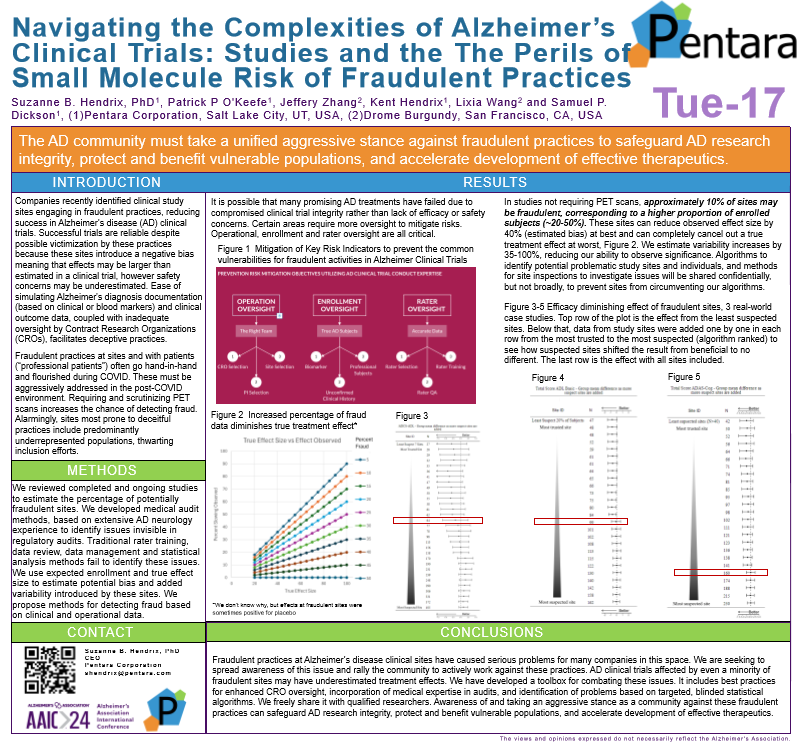
    P4-023: CLINICAL TRIAL DESIGN FOR A PHASE II, RANDOMIZED, PLACEBO-CONTROLLED TRIAL OF AMX0035 IN ALZHEIMER'S DISEASE

    Hendrix, Suzanne

    Abstract · matched in abstract

    Background: Amylyx has developed a novel therapeutic, AMX0035, for the treatment of neurodegenerative disease. AMX0035 is a proprietary combination of two small molecule compounds, Sodium Phenylbutyrate (PB) and Tauroursodeoxycholic Acid (TUDCA), de-signed to promote neuronal viability through simultaneous inhibition of ER stress and mitochondrial stress. PB and TUDCA have been evaluated separately in in vitro and in vivo models of Alzheimer’s disease (AD), and clinical trials in amyotrophic lateral sclerosis, Parkinson’s disease and Huntington’s disease. Amylyx discovered a synergy between these two compounds when administered together in a particular range of ratios across multiple preclinical models. Recruitment for the clinical trial began in late 2018. Methods: The study will evaluate safety, tolerability, and biomarkers of molecular target engagement, AD pathology, neurodegeneration and neurophysiology that indicate AMX0035 target engagement and neurobiological effects over 24 weeks. This will be a 6-month, parallel-group, randomized, double-blind, placebo-controlled study of people with late mild cognitive impairment (MCI) or early to moderate dementia due to AD. Participants in the active treatment arm will receive 3g of PB and 1g TUDCA administered orally twice daily. Results: Participants will be evaluated at Poster Presentations: Wednesday, July 17, 2019P1282baseline and at week 24 with multi-sequence structural and functional MRI to assess changes in regional brain volumes (T1), cerebral perfusion (ASL), functional connectivity (BOLD) and cerebrovascular pathology (FLAIR, SWI). Lumbar punctures will be performed at baseline and 24 weeks for selected CSF biomarkers including: amyloid-b1-42, tau, neurofilament light chain (NfL), and markers of mitochondrial redox, HDAC activity, neuronal injury, and neuroinflammation. Patients will be evaluated at weeks 1, 6,12, 18, and 24 for safety, tolerability, and changes in symptoms, as measured with the ADAS-Cog 13, ADCS-ADL, and NPI. Conclusions: This early phase trial is designed to evince target engagement, neurobiological effects, safety and tolerability of AMX0035with multiple objective endpoints including, standard clinical assessments and both established and novel biomarkers associated with neurocognitive impairment. Data will help determine whether to advance AMX0035 to a larger study to establish efficacy and safety and inform choices in study design, patient characteristics and outcome measures.

    Open → (opens in a new tab)
  7. 2019 · Alzheimer's & Dementia: Translational Research & Clinical Interventions

    FDA position statement "Early Alzheimer's disease: Developing drugs for treatment, Guidance for Industry"

    Hendrix, Suzanne

    Abstract · matched in abstract

    Despite billions of dollars invested in clinical trials to develop novel therapeutics for Alzheimer's disease, no approved treatments have been developed in the past 15 years. In that span, new classes of drugs have been developed and tested, including monoclonal antibodies, γ-secretase modulators, γ-secretase inhibitors, BACE inhibitors, RAGE inhibitors, nicotinic agonists, 5HT6 antagonists, and others. The one constant for all of these clinical trials programs is the use of the ADAS-cog as the primary scale to determine efficacy. The question that needs to be considered is whether it is the target engagement of the drug or the clinical trial measure testing the efficacy. The FDA put out a new position statement in 2018 informing the field on possible considerations for demonstrating efficacy to open the path for approval. Here, we propose and comment on a variety of approaches that are alternatives to the ADAS for FDA-specified stage 3 and 4 Alzheimer's disease. These novel outcomes are being validated in current clinical trials and could be used as efficacy measures moving forward.

    Open → (opens in a new tab)
  8. 2017 · Alzheimer's & Dementia

    [P2-034]: ARE ALZHEIMER'S DRUG FAILURES DUE TO INACTIVE COMPOUNDS OR ARE WE DOING SOMETHING WRONG?

    Hendrix, Suzanne

    Abstract · matched in abstract

    Background: Alzheimer's disease clinical trials have had an excessively high failure rate over the past 15 years, with 99.6% of drugs failing in 2002–2012 (Cummings 2014). Although many of these drugs were likely inactive, a 2-sided 0.05 alpha should result in a 2.5% success rate on the primary endpoint by chance alone. Other addressable factors such as patient heterogeneity, variable outcomes and variable measurement processes contribute to this particularly high failure rate. Methods: Public results from several failed clinical trials were evaluated to assess potential contributors to failure. The loss of power associated with each reason for failure and the potential impact of a solution for recovering that power were estimated. The risk and benefit of these solutions were also evaluated to determine whether they can be practically implemented. Results: Many failed studies showed no evidence of a treatment benefit; however, several studies illustrated known problems in AD research that could be addressed. Some failed studies blame population heterogeneity for failure, and target a more homogeneous population in future studies (e.g.: tramiprosate). Phase 2 studies often use pivotal-study standards for success, including co-primary endpoints, endpoints for mild/moderate disease in mild-only populations, models that don't account for patient heterogeneity and fitting separate visit means rather than a linear time model. Many studies are underpowered, resulting in equivocal results when effects are smaller than expected. Elementary issues, such as equivalence of forms for psychometric tests are often assumed, and not checked. For example, a glance at the Expedition 1, 2, and 3 ADAS-cog figures reveals an abnormally high score at Month 9 for all 3 studies, likely due to an easier wordlist at that visit. Conclusions: Successful Alzheimer's clinical trials require an active compound and successful study design demonstrated by narrow confidence intervals. Phase 2 studies should use different standards for success than phase 3 studies, and statistical and psychometric issues should be fully considered. Accurately identifying compounds with small effect sizes is the first step toward developing better treatments with larger effect sizes. Narrow confidence intervals indicate more precision in treatment effect size estimates leading to failing ineffective treatments and success for effective treatments.

    Open → (opens in a new tab)
  9. 2017 · Journal of biopharmaceutical statistics

    Statistical properties of continuous composite scales and implications for drug development

    Hendrix, Suzanne

    Abstract · matched in abstract

    Little research has been conducted on the statistical properties of composite measures comprising linear combinations of continuous component scales. We assessed the quantitative relationship between the composites and their individual components regarding their abilities to detect treatment effects. In particular, we developed the mathematical derivation of the treatment effect size of a continuous composite in relation to the treatment effect sizes of its components and proved multiple properties of the composite. We demonstrated that the treatment effect size of a composite is greater than the minimum treatment effect size of its components and that above certain thresholds of correlations of components and ratios of component effect sizes, the composite may outperform its components. Examples from Alzheimer's disease (AD) clinical studies of solanezumab and donepezil using the composite Integrated AD Rating Scale (iADRS) and its components, the AD Assessment Scale-Cognitive subscale (ADAS-Cog) and AD Cooperative Study-Activities of Daily Living inventory, instrumental items (ADCS-iADL) were consistent with the theoretical statistical properties. The understanding of the quantitative relationships between continuous composites and their components will be useful in clinical trial design and the development of new scales and composites across therapeutic areas.

    Open → (opens in a new tab)
  10. 2016 · J Prev Alzheimers Dis

    A novel eigenvector-based method to detect mild Alzheimer's disease using event-related potentials

    Brown, Bruce · Hendrix, Suzanne

    Abstract · matched in abstract

    Background: Tramiprosate is an oral amyloid anti-aggregation agent that reduces amyloid oligomer toxicity in preclinical studies and was evaluated in two 78-week trials in North America and Western Europe that enrolled 2,025 patients with Mild to Moderate Alzheimer's Disease. The completed North American study did not achieve its efficacy objectives, but a pre-specified subgroup analysis suggested potential efficacy in apolipoprotein E4 (APOE4) carriers. To further explore this observation, we analyzed tramiprosate Phase 3 clinical data based on the number of APOE4 alleles. Objectives: To analyze tramiprosate efficacy, safety, and occurrence of vasogenic edema in the three APOE4 subgroups: homozygous, heterozygous and non-carriers. Design: Randomized, double-blind, placebo-controlled parallel-arm multi-center studies. Setting: Academic Alzheimer's disease and dementia centers, community-based dementia and memory clinics, and neuropsychiatric clinical research sites. Participants: Subjects included 2,025 patients, 50 years of age or older, with approximately 60% having APOE4 carrier status (10-15% homozygotes and 45-50% heterozygotes), and mild to moderate disease. All subjects were on stable symptomatic drugs. Intervention: Randomized subjects received placebo, 100 mg BID, or 150 mg BID of tramiprosate. Measurements: Co-primary outcomes in both studies were change from baseline in the ADAS-cog11 and CDR-SB assessment scales. Results: Highest efficacy was observed in APOE4/4 homozygotes receiving 150 mg BID of tramiprosate, showing statistically significant effects on ADAS-cog and positive trends on CDR-SB (respectively, 40-66% and 25-45% benefit compared to placebo). APOE4 heterozygotes showed intermediate efficacy, and non-carriers showed no benefit. In 426 patients with MRI scans, no cases of treatment-emergent vasogenic edema were observed. In the three subgroups, the most common adverse events were nausea, vomiting, and decreased weight. Conclusions: The "APOE4 Gene-Dose effect" is likely explained by the high prevalence of amyloid pathology in symptomatic APOE4 carriers. In APOE4/4 Alzheimer's disease patients, the high dose of tramiprosate showed favorable safety and clinically meaningful efficacy in addition to standard of care.

    Open → (opens in a new tab)
  11. 2015 · The Journal of Prevention of Alzheimer's Disease

    Methodological aspects of the phase II study AFF006 evaluating amyloid-beta-targeting vaccine AFFITOPE® AD02 in early Alzheimer's disease—prospective use of novel composite scales

    Hendrix, Suzanne

    Abstract · matched in abstract

    Background: Optimized scales and composite outcomes have been proposed as a way to more accurately measure Alzheimer's disease related decline. AFFITOPE® AD02, is an amyloid-beta (Aβ)-targeting vaccine to elicit anti-Aβ antibodies. IMM-AD04, commonly known as Alum, originally designated as a control agent, appeared to have disease-modifying activity in a multicenter, parallel group phase II study in early AD patients. Objectives: To develop adapted outcomes for cognition, function and a composite scale with improved sensitivity to decline and treatment effects in early AD (mild plus prodromal AD) based on historical data and to assess these adapted outcomes in this phase II study. Design: Data from public datasets was analyzed using a partial least squares model in order to identify an optimally weighted cognitive outcome, Adapted ADAS-cog, and an optimally weighted ADL outcome, Adapted ADCS-ADL which were prospectively defined as co-primary endpoints for the study and were also combined into a composite scale. Data from 162 patients in the placebo groups of ADCS studies and 156 mild patients in the ADNI I study were pooled for this analysis. The Adapted ADAS-cog scale considered 13 ADAS-cog items as well as several Neuropsychological test items and CogState items, the Adapted ADCS-ADL considered all ADCS-ADL items. After the pre-specified analyses were complete, additional adapted and composite scales were investigated in a post-hoc manner. Evaluation of the adapted and composite scales was performed on Phase II trial data for AFFITOPE® AD02 (AFF006, Clinical Trial Identifier: NCT01117818) and historic data in early AD. Least square means, standard deviations, and least squares mean to standard deviation ratios were compared among adapted and composite scales and traditional scales for the 5 treatment groups in the phase II study and overall for the historic data. Treatment effect sizes and p-values were also compared for the phase II study. Results: Cognitive items that were selected for the adapted cognitive scale (aADAS-cog) and had the highest weights were Word Recall, Word Recognition, and Orientation. Delayed Word Recall and Digit Cancellation were among the items excluded due to lack of improved sensitivity to decline. Highly weighted ADL items included in the adapted functional scale (aADCS-ADL) were using the telephone, traveling, preparing a meal/snack, selecting clothing, shopping and using appliances. Excluded items were primarily basic ADLs such as eating, walking, toileting and bathing. Comparisons between traditional scales and primary outcome adapted scales show improved sensitivity to group differences with the adapted scales in the phase II trial. Most of the improvement in the sensitivity of the aADAS-cog and the aADCS-ADL is due to a larger treatment difference observed rather than the improved sensitivity to decline in the comparison groups. Conclusion: To our knowledge, this is the first study to prospectively use optimized scales as primary endpoints and to demonstrate the superior power of optimized scales and composites in early disease. Although it is possible that the treatment difference between randomized groups is due to a factor other than the treatment itself, for instance baseline imbalance, the improved power to detect these differences still argues in favor of the adapted scales. The issue of oversensitivity to detect treatment effects is controlled by selection of the alpha level for significance, and in our case will happen less than 5% of the time. Clinical relevance of the treatment difference should be assessed separately from statistical significance, and in this phase II study, is supported by significant or similar sizes of effect on function, behaviour and quality of life outcomes, which are important to patients and caregivers.

    Open → (opens in a new tab)
  12. 2012 · Alzheimer's & Dementia

    P4-305: Introducing a new tool for optimizing responsiveness to decline in early Alzheimer's disease

    Hendrix, Suzanne

    Abstract · matched in abstract

    Background: No well-established, validated endpoints exist that are sensitive to change in MCI populations in clinical trials. Our goal was to develop a tool based on standard clinical items that would demonstrate maximum responsiveness to progression and to treatment in an MCI population and would also perform well in a mild AD population (collectively referred to as Early AD). This analysis uses a novel approach by utilizing data from multiple studies to investigate responsiveness to progression and treatment effects rather than sensitivity to baseline deficits. Methods: This tool was built empirically with no a priori assumptions. A partial least squares (PLS) regression model used placebo data from 4 MCI studies over 12 months to select the combination of cognitive and functional items which is most sensitive to change over time, using items from a variety of well-established and validated scales. The PLS regression coefficients from the model were used to form a weighted composite score. The resulting composite score is comprised of ADAS-Cog, MMSE and CDR items. Performance of the composite score was assessed against the original scales in an MCI population, in enriched (CSF Aβ positive) MCI subgroups, with split sample validation, in the presence of a treatment effect and in a mild AD patient population combining data from 3 studies. Results: A composite clinical score was devised from 12 items from the ADAS-Cog, MMSE, and CDR-SB that assess both cognition and global function. This score demonstrates improved sensitivity to decline, as well as reduced heterogeneity, as compared with original scales, and is responsive to treatment effect in MCI, enriched MCI and mild AD populations. The composite score allows for substantial sample sizes reductions in non-enriched and enriched MCI populations for a 12-month study (see Figure). Conclusions: A new composite clinical score that utilizes relevant items from validated and well-established clinical tools provides a tool that can be used as a single clinical outcome in studies that target MCI, enriched MCI and mild AD populations. This tool will enable the use of substantially smaller sample sizes due to improved sensitivity to disease progression and treatment effects.

    Open → (opens in a new tab)
  13. 2008 · Alzheimer's & Dementia

    P4-376: A phase 3 multicenter trial of tarenflurbil in subjects with mild dementia of the Alzheimer's type (Act-Earli-AD): Rationale and methodology

    Hendrix, Suzanne

    Abstract · matched in abstract

    Background: Tarenflurbil is a Selective Aβ42-Lowering Agent (SALA) that modulates γ-secretase activity to preferentially reduce production of Aβ42 in vivo and in vitro. Evidence for potential benefit of tarenflurbil 800 mg bid in subjects with mild AD was recently observed in a randomized, double-blind Phase 2 trial of up to 24 months of treatment. Methods: A target of 1600 subjects with mild AD (MMSE score 20–26) were to be randomized (1:1) to receive tarenflurbil 800 mg bid or placebo for 18 months. Randomization was stratified according to stable use/nonuse of acetylcholinesterase inhibitors (AChEIs) and/or memantine. The co-primary efficacy outcomes are the rate of change (slope) in ADAS-cog and the ADCS-ADL, with assessments conducted every 3 months. The secondary outcome is the CDR-sb, with additional exploratory outcomes including the NPI, Quality of Life-AD, and Caregiver Burden Inventory. ECGs are obtained every 3 months, with adverse events monitored throughout the study. Plasma samples are collected every 3 months for pharmacokinetic and exploratory biomarker analyses. Results: This trial enrolled 1684 subjects at 133 sites in the United States. The last patient visit occured in March 2008, with database lock occuring in June of 2008. At enrollment, 33% of subjects were using AChEIs alone (stable for ≥ 6 months), 6% of subjects were using memantine alone (stable for ≥ 3 months), 41% of subjects were using both AChE is and memantine and 19% of subjects were taking no AD therapy. A second Phase 3 trial of similar design, fully enrolled with 840 subjects, is ongoing in the US, Canada and Europe and is expected to be completed in the clinic in October of 2008. Conclusions: This Phase 3 protocol was developed based on Phase 2 trial results. It is powered to evaluate the efficacy of tarenflurbil with respect to the primary outcomes, and to examine its effect both as monotherapy and as add-on therapy with currently marketed AD medications.

    Open → (opens in a new tab)
  14. 2005 · Alzheimer's & Dementia

    [02-01-05]: A placebo-controlled, double-blind trial of the selective AB-42 lowering agent, flurizan (MPC-7869,(R)-flurbiprofen) in patients with mild to moderate Alzheimer's disease

    Hendrix, Suzanne

    Abstract · matched in abstract

    Background: Several epidemiological studies have suggested that longer-term use of NSAIDs may reduce the risk of developing Alzheimer's disease (AD). Although there were encouraging results from some earlier studies, more recent longer-term, larger, placebo-controlled clinical trials utilising drugs with an anti-inflammatory action have produced disappointing outcomes. Re-analysis of the epidemiological data has shown that the protective effect is limited to a subgroup of NSAIDs, including flurbiprofen, which have Aβ-42 lowering properties and which were not used in the previous longer-term placebo-controlled trials. Flurizan (MPC-7869 (R)-flurbiprofen) is a single enantiomer of flurbiprofen, which has been shown to lower brain levels of Aβ-42 in a mouse model of AD (Tg2576), with some evidence of an effect on learning and memory. There is little risk of gastric toxicity because of a lack of anti-COX activity, and the compound has been shown to be safe and well tolerated in healthy older volunteers (55-80yrs) at doses of up to 1600mg per day when administered for 21 days in a phase I study. It is therefore an exciting potential disease modifying treatment for AD. Objective(s): This presentation will provide efficacy and safety data from a clinical trial of Flurizan, which to our knowledge will be the first multi-centre, placebo-controlled, double-blind clinical study of a selective Aβ-42 lowering agent in patients with mild to moderate Alzheimer's disease. Methods: This is a one-year trial evaluating both 400mg BID and 800mg BID of (R)-flurbiprofen per day, in 210 patients (50% female) with mild to moderate AD (MMSE 15-26). It employed the ADAS-cog, ADCS-ADL, CDR-sb, CIBIC plus, NPI and MMSE as outcome measures. At baseline the mean age of the subjects was 75 years with an average MMSE score 21 and an average standard ADAS-cog score 23. Of the patients enrolled in the trial, 94 per cent were also taking stable doses of cholinesterase inhibitors. Concomitant treatment with memantine was not allowed. Conclusions: The study completes in March 2005, and the cognitive, functional, global and behavioural outcomes will be presented, together with the safety data.

    Open → (opens in a new tab)

Looking for older work, or a specific methodology paper? Our research team can point you to the right reference.

Ask our team